If you have ever searched for saffron or kesar, you may have wondered whether they are two different spices. In most Indian contexts, saffron and kesar refer to the same spice, which comes from the dried stigmas of the Crocus sativus flower. “Saffron” is the commonly used English name, while “kesar” or “kesar” is widely used in Indian languages and markets. Because terminology can vary between regions and languages, shoppers may encounter several names for the same ingredient. Understanding this can make online grocery shopping and recipe research much easier. Saffron is valued for its distinctive aroma, delicate flavor, and golden color. It is used in Indian milk preparations, sweets, desserts, rice dishes, beverages, and festive recipes. The spice is also used internationally in many culinary traditions. Despite being sold in small quantities, saffron is considered a premium ingredient because harvesting it requires considerable manual work. Each flower produces only a small number of usable stigmas, which are carefully collected and dried. This contributes to the spice's premium position in the market. When shopping, consumers should focus on product quality, packaging, quantity, and seller information rather than becoming confused by the different names.
The word “kesar” is widely used in India to refer to saffron. In everyday conversations, recipes, grocery stores, and traditional preparations, people may use “kesar” more frequently than “saffron.” This is particularly common when discussing Indian sweets and beverages such as kesar milk, kesar peda, kesar kulfi, and kesar shrikhand. English-language product descriptions often use the term saffron, while Hindi and other Indian-language content may use kesar. Both terms generally point to the same botanical spice. You may also encounter terms such as “kesar threads” or “saffron strands,” which describe the dried stigmas used in cooking. The important point is that different names do not necessarily indicate different ingredients. When purchasing, check the product description to understand exactly what is being offered. A product sold as saffron threads or kesar threads should provide relevant information about its quantity, packaging, and characteristics. This understanding is particularly useful for online searches because consumers may find more results when they search using both terms. For PremSaffron, using both “saffron” and “kesar” naturally within relevant content can also help customers understand the product and discover recipes more easily.
Saffron has many culinary applications. In India, it is particularly popular in milk-based desserts and festive dishes. Kesar milk is perhaps one of the simplest preparations. A few strands can be soaked in warm milk and then combined with the main drink. In desserts, saffron can be used in kheer, kulfi, shrikhand, basundi, rasmalai, rabdi, peda, and halwa. In savory cooking, it may be used in biryani, pulao, and other rice dishes. Saffron is also used in beverages and selected international recipes. Because the spice has a concentrated aroma, only a small quantity is usually needed. Proper preparation can help distribute its color and fragrance throughout the dish. Soaking the threads in warm milk or water is a common technique. Storage is equally important. Keep saffron sealed and protected from moisture, heat, direct sunlight, and strong odors. Understanding these simple principles allows consumers to use the same ingredient effectively across many recipes. Whether a recipe calls for “kesar” or “saffron,” you can generally expect it to refer to this same premium spice.


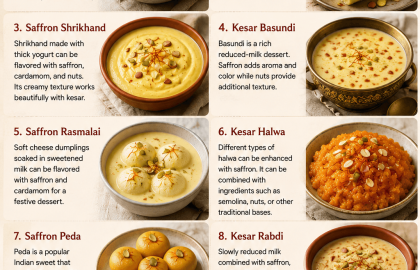
Saffron is a favorite ingredient in Indian desserts because its aroma and golden color pair beautifully...
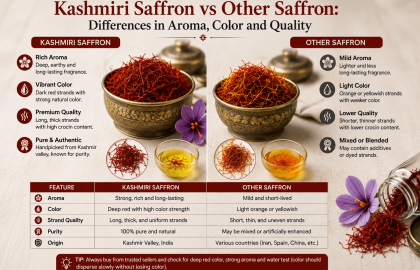
Saffron is produced in different regions and can vary in appearance, aroma, flavor, and quality. Learn...
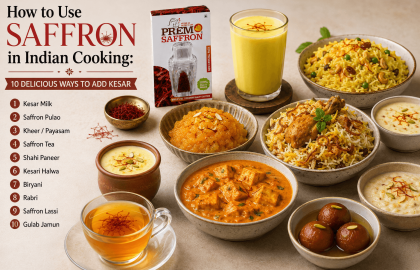
Saffron can transform ordinary recipes with its distinctive aroma, golden color, and delicate flavor. Explore practical...