Saffron, commonly known as kesar, is one of the world's most valuable spices. Its distinctive aroma, deep color, and delicate flavor make it popular in Indian sweets, milk, rice dishes, beverages, and festive recipes. Because only a small quantity is generally required, good-quality saffron can be a premium purchase. This is why understanding how to identify pure saffron at home can help consumers make more informed buying decisions. Genuine saffron consists of dried stigmas of the Crocus sativus flower and naturally has a delicate, thread-like appearance. The individual strands are usually deep red to reddish-orange rather than looking uniformly bright or artificially colored. When purchasing saffron, it is useful to examine the product carefully instead of relying only on price or packaging. A very low price does not automatically mean the product is poor, just as a high price alone does not prove authenticity. Factors such as origin, processing, packaging, storage, and grade can influence quality. Learning a few simple observations can therefore make it easier to distinguish good-quality saffron from products that may have been mixed, dyed, or poorly stored.
One of the easiest ways to begin checking saffron quality is by looking closely at the threads. Genuine saffron threads are delicate and irregular because they are natural parts of a flower. They are not perfectly identical pieces manufactured to look alike. Many genuine strands have a broader end and may show a slightly trumpet-like or flared appearance. Their color generally ranges from deep red to reddish-orange, depending on the saffron and its processing. You should also look for clean, dry threads without excessive powder, moisture, foreign particles, or unusually bright artificial coloring. However, appearance alone should never be treated as conclusive proof of purity. Different grades of genuine saffron can naturally look somewhat different. A better approach is to combine visual inspection with aroma, texture, and color-release observations. When saffron is stored properly, the threads should remain dry and retain their characteristic fragrance. If the strands appear damp, unusually soft, heavily broken, or surrounded by excessive residue, the product deserves closer examination. Buying saffron in properly sealed packaging from a reputable seller can also reduce the possibility of contamination or improper handling. Consumers should remember that authenticity is best assessed through multiple quality indicators rather than one simple home test.
There are several traditional observations people use when checking saffron at home. One common method involves placing a few strands in warm water or milk and observing how the color develops. Genuine saffron generally releases its natural color gradually rather than immediately producing an intense artificial-looking color. The liquid should develop a characteristic yellow to golden tone, depending on the amount used and the preparation. Another useful observation is aroma. Saffron has a distinctive fragrance that can be difficult to imitate naturally. Fresh, properly stored saffron should have a noticeable aroma, while old or poorly stored saffron may have a weaker fragrance. Texture can also provide useful information. Dry saffron threads should feel relatively crisp rather than wet, sticky, or unusually soft. When gently crushed, saffron should behave like a dried botanical material rather than leaving suspiciously strong artificial color on the fingers. These checks are useful for everyday awareness, but they are not laboratory tests. Some adulterated products can be designed to pass simple visual or household checks. Therefore, for higher confidence, consumers should consider factors such as transparent labeling, appropriate packaging, traceability, seller reputation, and recognized quality or testing information where available. A reliable source should provide clear product information instead of making vague claims about purity. For online purchases, product photographs, packaging details, ingredient information, and customer support can also help shoppers evaluate the product before ordering.
Home checks can help consumers become more knowledgeable, but they should not replace proper quality assurance. Saffron is a natural agricultural product, so characteristics can vary according to growing region, harvesting practices, drying methods, storage conditions, and grade. A consumer may therefore encounter genuine saffron with slightly different appearances while still receiving a quality product. This is why focusing on several indicators is more useful than expecting every genuine saffron thread to look exactly the same. A trustworthy brand should communicate clearly about the product instead of relying only on words such as “premium” or “100% pure.” Consumers can look for complete product information, appropriate packaging, net quantity, batch information, and other applicable labeling details. For online shopping, it is also useful to review the product description carefully and understand what quantity is being purchased. Since saffron is potent, even small packs can provide numerous servings depending on how it is used. Proper storage after purchase is equally important. Keeping saffron in a tightly sealed container away from heat, moisture, and direct sunlight can help preserve its aroma and quality. Consumers should also avoid transferring saffron into containers that have strong residual odors because saffron can absorb surrounding aromas. When purchasing premium ingredients, informed buying and proper storage work together to protect the value of the product.
Knowing how to identify pure saffron at home can make the buying process more informed and practical. Consumers can begin by examining the natural appearance of the threads, checking their aroma, observing their texture, and watching how their color develops when used in warm water or milk. These simple observations can provide useful clues about the saffron, but no basic home method can guarantee authenticity with absolute certainty. Laboratory testing and appropriate quality-control procedures are more reliable when definitive verification is required. For everyday purchasing, however, combining basic observations with responsible buying habits is a sensible approach. Choose saffron that is properly packaged, clearly labeled, and sold by a reputable source. Avoid making decisions based solely on unusually low prices or exaggerated claims. Once you have purchased good-quality saffron, store it correctly in an airtight container away from light, heat, moisture, and strong odors. With the right knowledge, consumers can better appreciate why saffron is a premium spice and make more confident choices when purchasing kesar for cooking, beverages, desserts, and traditional recipes.

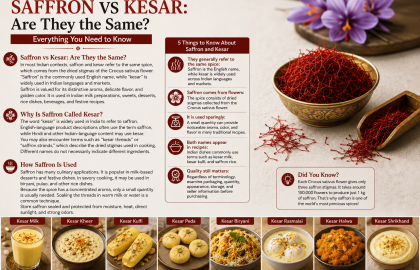
Saffron and kesar are two commonly used names for the same premium spice. Learn about its...
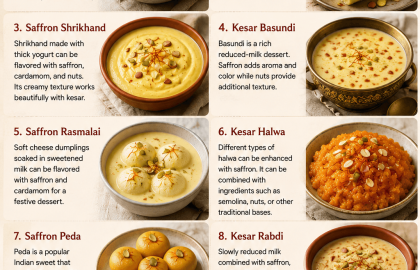
Saffron is a favorite ingredient in Indian desserts because its aroma and golden color pair beautifully...
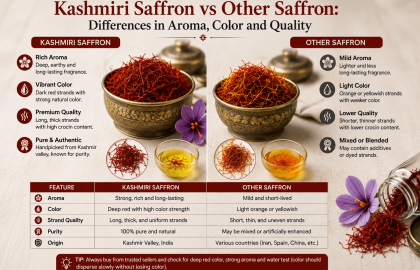
Saffron is produced in different regions and can vary in appearance, aroma, flavor, and quality. Learn...