India has a rich tradition of using herbs, roots, leaves, seeds, flowers, and fruits in food, personal care, and traditional wellness practices. Modern herbal powders make many of these ingredients easier to store and use. PremSaffron's herbal range includes ingredients such as amla, aritha, shikakai, mulethi, Triphala, shatavari, ashwagandha, moringa, baheda, harde, himej, amba haldi, arjun chal, babulfali, beetroot, bhingraj, gokhuru, hibiscus, jamun seeds, kaucha seeds, karela, kali jiri, methi, neem, mint, tulsi, and other botanical products. Each ingredient has a different traditional background and culinary or personal-care application. However, consumers should not assume that every herbal powder is appropriate for every person or that traditional claims are equivalent to medical evidence. The best way to approach herbal products is to understand the ingredient, read the product information, follow preparation instructions, and consider individual circumstances. Herbal powders should complement a balanced lifestyle rather than replace nutritious food or professional healthcare. Choosing well-packaged products and storing them correctly also helps preserve quality.
Herbal powders can broadly be grouped according to their traditional applications. Some are commonly associated with food and wellness, such as amla, moringa, beetroot, methi, jamun seeds, and karela. Others are frequently used in traditional hair-care routines, including amla, aritha, shikakai, bhingraj, hibiscus, neem, and mehendi. Some ingredients have a long history in Ayurvedic herbal formulations, including ashwagandha, shatavari, Triphala, baheda, harde, himej, and mulethi. Ingredients such as Multani Mitti and rose petal powder are commonly associated with traditional beauty routines. Understanding the intended application makes it easier to choose an appropriate product. For example, a customer looking for a traditional hair mask may be more interested in shikakai, aritha, amla, hibiscus, or bhingraj than in a food-oriented powder. Similarly, someone interested in culinary use may prefer spices or food ingredients rather than cosmetic powders. This distinction can help consumers avoid using a product in an unsuitable way.
When selecting herbal powders, start by identifying your intended purpose. Read the product description, ingredients, recommended usage, and storage instructions. Choose packaging that protects the powder from moisture and contamination. After opening, use a clean, dry spoon and close the container immediately. For cosmetic applications, patch testing is recommended before applying a new herbal mixture broadly. For products intended for consumption, follow the manufacturer's instructions and consider professional advice if you take medication, are pregnant, or have an existing health condition. Avoid products that make unrealistic claims such as guaranteeing cures for serious diseases. Traditional ingredients can be valuable parts of cultural and lifestyle practices, but they should not be presented as replacements for evidence-based healthcare. The same principle applies to products marketed for specific body systems or medical concerns. Responsible communication benefits both consumers and brands because it builds trust and reduces confusion.

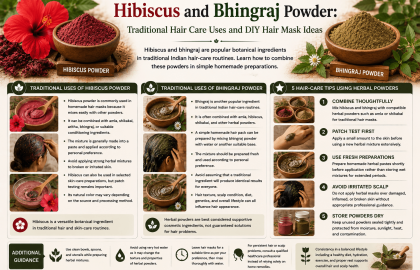
Hibiscus and bhingraj are popular botanical ingredients in traditional Indian hair-care routines. Learn how to combine...
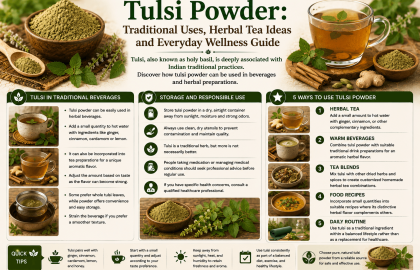
Tulsi, also known as holy basil, is deeply associated with Indian traditional practices. Discover how tulsi...
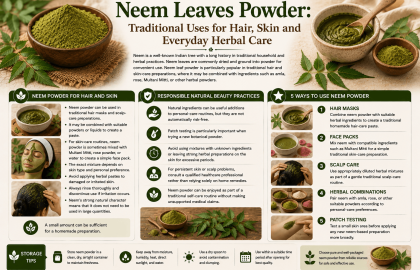
Neem has a long history in Indian traditional practices. Learn how neem leaf powder can be...