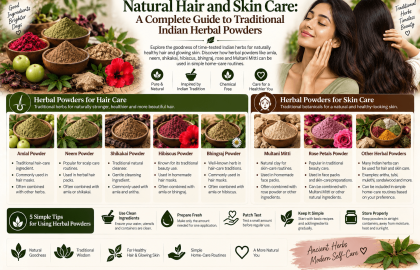
Hibiscus has a strong place in traditional Indian beauty practices. Its flowers and leaves have been used in homemade hair preparations for generations, and dried hibiscus can be ground into a convenient powder. Hibiscus powder is commonly combined with amla, bhingraj, shikakai, or other herbal ingredients to create traditional hair masks. The powder can be mixed with water or another suitable base to form a paste. While many traditional users value hibiscus for hair care, it is important not to promise specific outcomes such as guaranteed hair growth or prevention of hair loss. Cosmetic results vary between individuals. Hair texture, scalp condition, genetics, diet, and lifestyle can all influence appearance. Hibiscus powder is best approached as a botanical ingredient within a broader hair-care routine. Before using it, perform a patch test and discontinue use if irritation develops. Proper storage keeps the dry powder protected from humidity and contamination.
A simple hibiscus hair mask can be made by combining hibiscus powder with clean water. For a richer herbal preparation, it can be mixed with amla or bhingraj powder. Some people prefer adding a suitable conditioning base depending on their hair type. The mixture should be smooth enough to spread without excessive pulling. Apply gently to the hair and scalp, avoid the eye area, and rinse thoroughly. Do not store wet mixtures for long periods because homemade preparations do not have the preservation systems found in commercial products. Prepare only what you need for one application.
Hibiscus can be combined with several traditional hair-care powders. Amla provides a familiar Indian botanical ingredient, while bhingraj is commonly associated with traditional hair routines. Shikakai and aritha can be incorporated when a cleansing element is desired. However, combining many ingredients is not always better. Start with a simple formula and introduce one new ingredient at a time. This makes it easier to identify the source if irritation occurs.


Traditional Indian beauty routines use a wide range of botanical powders for hair and skin care....
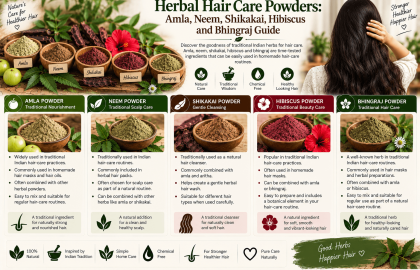
Indian herbal traditions use many plant powders in hair-care routines. Learn how amla, neem, shikakai, hibiscus,...
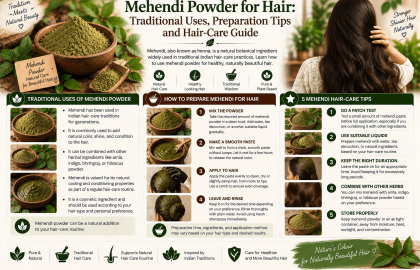
Mehendi, also known as henna, has a long history in Indian beauty traditions. Discover how natural...